
aul stands as one of the most tragic figures in biblical narrative—a man chosen by God, yet undone by his own insecurities. His story begins not with ambition but with hesitation. When Samuel anointed him privately, Saul was a young man from the tribe of Benjamin, a tribe so small that Saul himself later asked, "Why speakest thou thus unto me?" (1 Samuel 9:21). He was tall, handsome, and from a family of some standing。but he hid among the baggage when the public lot fell on him. That initial reluctance foreshadows everything that follows: Saul never fully embraced his calling, and his reign became a series of half-measures and compromised obedience.What strikes me about Saul is how quickly his confidence curdled into paranoia. Early victories—against the Ammonites, the Philistines, the Amalekites—gave way to a fixation on David, the young harpist who had once soothed his tormented spirit. Saul's jealousy wasn't abstract;
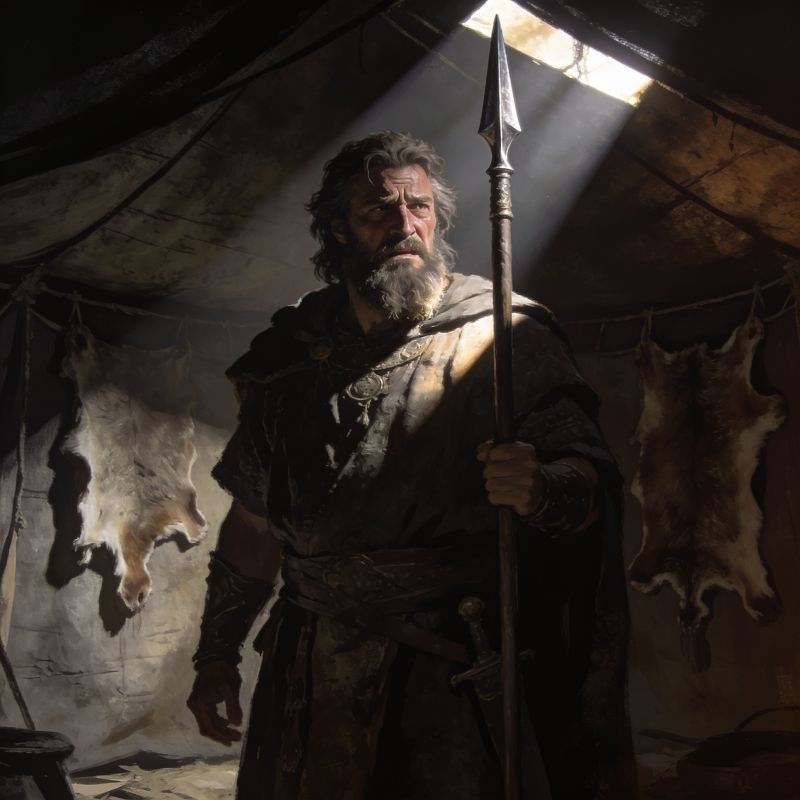
it was visceral. He hurled a spear at David twice (1 Samuel 18:11;19:10), pursued him through the wilderness of Ziph and Engedi。and slaughtered eighty-five priests at Nob simply because one of them had unknowingly aided David. I've often wondered whether Saul's real enemy was David or the mirror David held up to him—a younger, more beloved version of himself. The text says an evil spirit from the Lord troubled Saul, but his choices were his own. He built a monument in his own honor at Carmel (1 Samuel 15:12) while neglecting the one who had made him king.The Amalekite episode is the hinge of Saul's downfall. God commanded total destruction, but Saul spared King Agag and the best of the livestock. When Samuel confronted him, Saul's first response was a lie—"I have performed the commandment of the Lord"—followed by blame-shifting onto the people. Samuel's rebuke cut to the heart of the matter: "To obey is better than sacrifice, and to hearken than the fat of rams" (1 Samuel 15:22). That single act of partial obedience cost Saul his dynasty. It's a harsh standard。but the narrative is unflinching: Saul feared the people more than he feared God. His kingdom was torn from him, and the Spirit of the Lord departed from him. From that point on, Saul was a king in title only, ruling without divine sanction, haunted by the knowledge that his successor was already among his court.Saul's final chapter is pure tragedy. Desperate for guidance, he consulted a medium at Endor—a practice he himself had outlawed—to summon the dead prophet Samuel. The message he received was grim: tomorrow, you and your sons will be with me. On Mount Gilboa, the Philistines overwhelmed Israel's army. Saul's sons Jonathan, Abinadab。
and Malchi-shua fell in battle. Saul, wounded by archers, asked his armor-bearer to run him through, but the man was too afraid. So Saul took his own sword and fell on it. The Philistines cut off his head and fastened his body to the wall of Beth-shan. When the men of Jabesh-gilead heard, they marched all night to retrieve the bodies and gave them a proper burial. Even in disgrace, Saul inspired loyalty—a reminder that he was not a monster but a broken man.Reflecting on Saul's life。I see a cautionary tale about the corrosive power of fear and the cost of partial obedience. He had the makings of a great king: courage in battle, the loyalty of his son Jonathan, the initial anointing of God. But he could not trust, could not wait, could not fully surrender. His story asks uncomfortable questions. How often do we build monuments to our own reputations while neglecting the quiet obedience that matters more?
Saul's tragedy is that he knew better—he had Samuel's voice in his ear—and still chose his own way. That's not just ancient history;it's a mirror for anyone who has ever been entrusted with something sacred and let fear shrink it.